
fbpx
Nurture Your Body, Cherish Your Life ®
Free Shipping On Orders Over $60.00
×

Cart

The days have become shorter and finally, we are getting out of the summer heat and into cooler temperatures! And if you’re from Arizona, like us, hallelujah!

You may begin to notice some changes in your skin.  For instance, cold weather may cause your skin to feel dryer than normal – and acne breakouts are more common due to the low level of humidity in the air in which adversely effect our skin.

Protect your lips.

The most affected area is our lips, which tend to peel and crack. Our lips have very thin and sensitive skin. Many people think if they lick their lips that will help the dryness, on the contrary, this makes it worse. Use lip balm or plain petroleum jelly-based products such as Vaseline or Aquaphor ointment.

Cold and dry air depletes moisture form our skin.

Drink water – especially in winter when we don’t have the desire to drink as much water and, also, during physical activity. Set a goal to drink a certain amount of water each day. It could be plain (cold or warm), flavored water, mineral water, coconut water or similar to that nature.  Some food also helps hydration such as soup, grapes or yogurt.

Moisturize!

When you buy moisturizer – be selective. Buy a moisturizer with effective ingredients. Harmful chemicals or artificial fragrance/parfum make your skin even more dry. Moisturizing your skin will help to keep it healthy. But, make sure it contains more plant extracts and other ingredients that are helpful to moisturize your skin, such as Shea Butter, Glycerin, Jojoba oil, Sunflower oil or Olive oil.

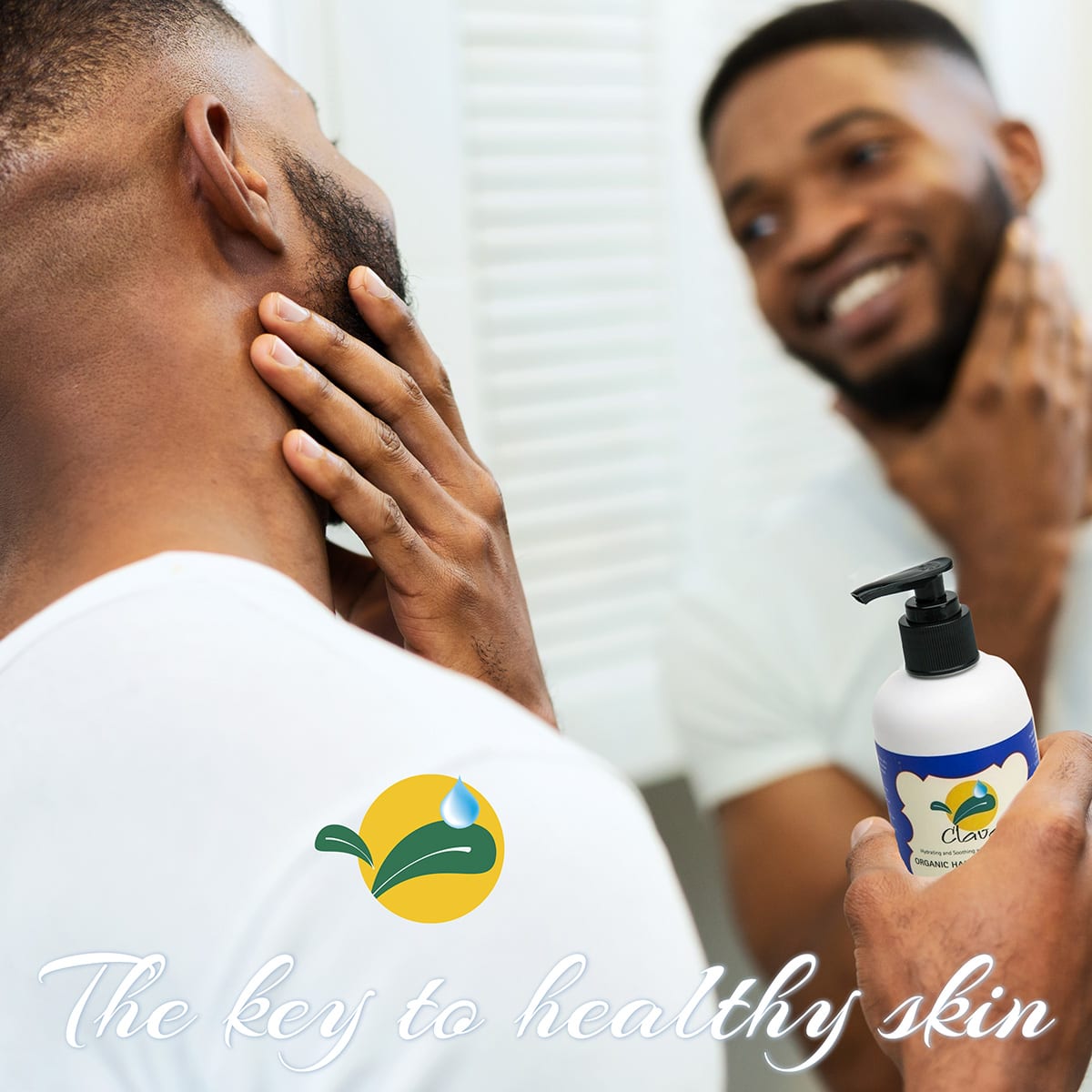
Our organic and natural moisturizers are made with plant extract and organic ingredients for both women and men. Visit www.clavebodycare.com/shop.

Colder temperatures mean longer, hot showers.

We love to take a long hot shower in the Fall and Winter – although it might feel great, it can make your skin dry. Hot water may strip your skin from natural oils and protein (keratin) that are needed for healthy skin. Try lukewarm water.

Moisturizing and keeping your skin healthy and hydrated should reduce skin problems. However, if you think the change in your skin is not normal, or it is not getting better with moisturizers and other remedies, you may consider a visit to your dermatologist.

We are surrounded by pollution. Pollution erodes the ozone layer in the upper atmosphere which exposes us to ultraviolet radiation (UV) from the sun. Pollution’s free radicals not only threaten our planet, but these tiny particles penetrate deep through the skin which then cause dehydration and inflammation. Exposure to pollution and UV sunlight will increase dark spots on our skin and make it prone to developing wrinkles.

Moreover, climate has its own impact on our skin. For example, in the Southwest where climate is dry and hot, the environment expedites skin’s premature aging.  Cold climate can make skin dry and brittle.

So, how can YOU protect YOUR skin?
With so many products on the market, it is difficult to pinpoint the ones that will work for your skin type. Plus your skin changes over time due to stress, hormonal fluctuation, water content, medication and age.   

Dry skin:

Having dry skin is common. Tip: Use warm, not hot water, in the shower or bath. Avoid cleansers with alcohol and synthetic fragrance; instead use a rich moisturizer to protect your skin from drying out. Always remember to use sunblock with a higher SPF.

Oily skin:

Your skin naturally produces sebum (skin oil) for protection. Skin feels oily when it is pumping out more sebum than required – happening mostly around the nose, forehead or T section of your face. Tip: Keep your skin clean and wash your face twice a day. Use oil-free foaming cleanser and light moisturizer.

Normal skin:

Your skin tone is fairly even with no visible pores or blemishes and neither oily nor dry. That doesn’t mean you are free from taking care of it! Tip: Wash your face every day to get rid of dead skin and dirt and exfoliate twice weekly.

Sensitive skin:

Sensitive skin is delicate, gets irritated easily and requires tender care. Tip: Use products that contain calming ingredients such as aloe, cucumber, green tea, chamomile, oatmeal and honey.  Wash your face gently with lukewarm water; gently pat dry with clean towel.

Final thought:

Heavy cleansers contain potentially harmful chemicals that could actually make your skin dry and dull. So, before moisturizing or putting on an anti-aging treatment, cleanse your face gently with lower PH (slightly acidic) soap or a gentle cleanser (like Clavé’s Orange Blossom Green Tea Facial Cleaner) with natural ingredients that relax the skin. Wash your face with lukewarm water, pat dry with clean towel.